 Descargar número completo
 Download full issue
CITE THIS WORK
Sánchez Tripiana M, Plaza Fernández A, Navarro Moreno E, Hernández Martínez Á. The anti-TNF paradox: palmoplantar pustular psoriasis. RAPD 2026;49(3):113-114. DOI: 10.37352/2026493.6
Clinical case
A 50-year-old man with no relevant medical history or concomitant medications was diagnosed in 2005 with stenosing ileal Crohn’s disease. He began treatment with subcutaneous adalimumab in January 2025, achieving an adequate clinical response in the intestines and improvement in gastrointestinal symptoms.
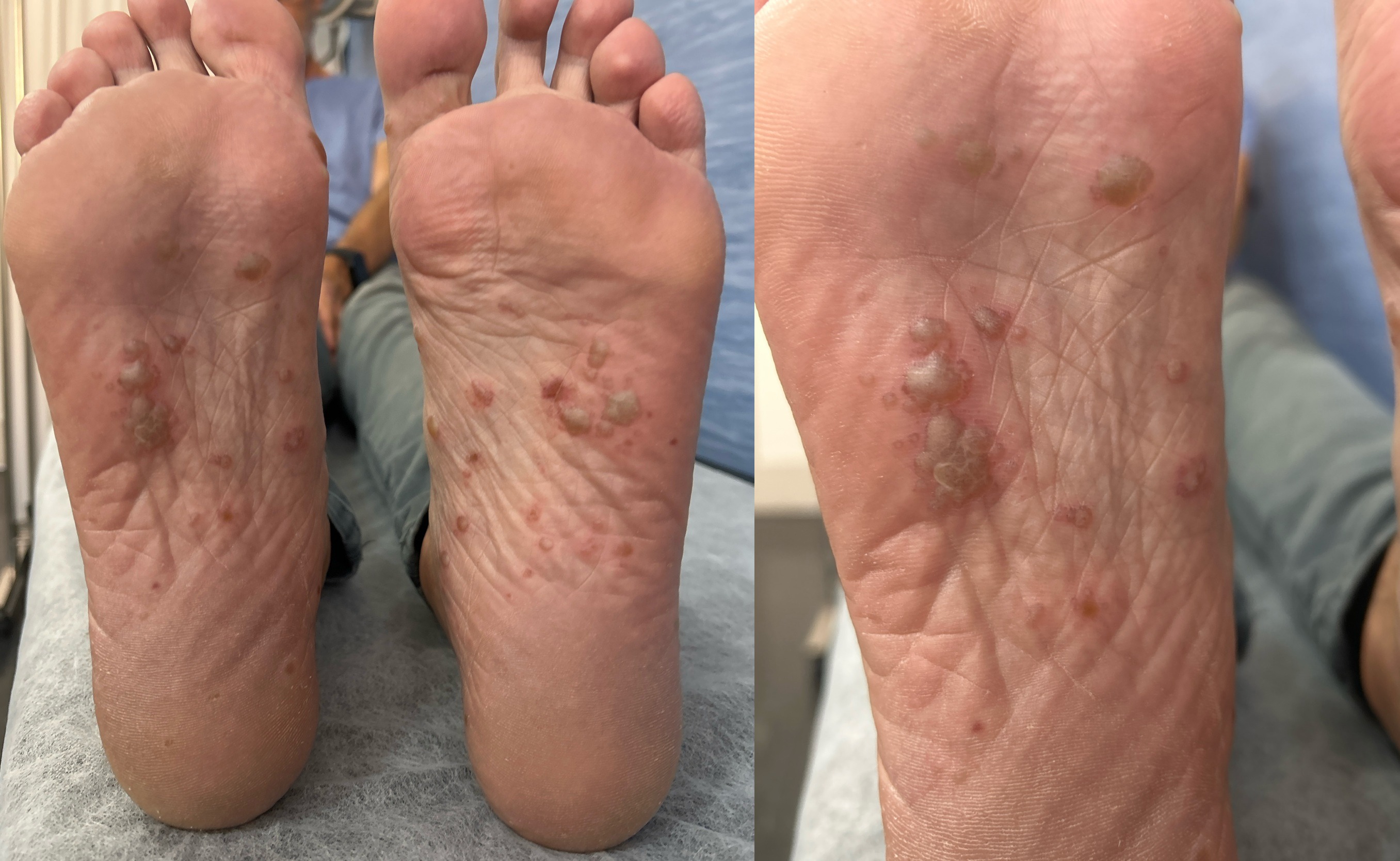
After approximately eight months of treatment, he developed skin lesions on the palms and soles, characterized by erythema, scaling, and painful pustules. He was evaluated by the Dermatology department, where the lesions were classified as palmoplantar pustular psoriasis, a rare condition recognized as a possible paradoxical reaction induced by adalimumab.
Given this suspicion, it was decided to discontinue adalimumab and switch therapy to ustekinumab. Following induction and the first maintenance doses, the patient experienced complete resolution of the skin lesions and maintained adequate control of his inflammatory bowel disease, with no new flare-ups or associated complications.
Discussion
Anti-TNF-induced paradoxical psoriasis reflects the immunological complexity of these therapies. Sustained TNF blockade may promote the activation of alternative pathways, such as IL-23/IL-17, and the overexpression of type I interferon, which contributes to the development of skin lesions. The therapeutic approach must simultaneously evaluate intestinal activity and dermatological involvement. In moderate to severe cases, switching to a biologic with a different mechanism of action, such as ustekinumab, offers a dual benefit: resolution of skin lesions and stable control of inflammatory bowel disease. This case underscores the importance of identifying these paradoxical reactions early and considering therapeutic strategies based on alternative immune pathways to optimize comprehensive patient care.