
 Descargar número completo
 Download full issue
CITE THIS WORK
Rosales Zábal JM, Romero Herrera G. Autoimmune hepatitis: management of complex cases. RAPD 2026;49(4):xx-xx. DOI: 10.37352/2026494.1
Introduction
AIH is an immune-mediated disease that affects people of all ages and ethnicities, with a marked predominance in women[5]. It is characterized by the presence of autoantibodies, IgG hypergammaglobulinemia, and interfacial hepatitis on histology[1],[6]. Its clinical spectrum is broad, ranging from indolent forms to severe acute presentations with coagulopathy and a risk of liver failure. Without treatment, mortality is high, up to 6 times higher in the first year[5]. Conventional management is based on induction with corticosteroids (prednisolone or budesonide) followed by maintenance therapy with AZA[7],[8]. However, clinical heterogeneity and drug toxicity necessitate therapeutic personalization to prevent progression to cirrhosis and the need for transplantation[2],[6]. This clinical heterogeneity explains why a significant percentage of patients do not fit the classic therapeutic paradigm, constituting so-called complex cases, whose management remains a significant clinical challenge.
We present a narrative review based on recent guidelines (EASL 2025), position statements, and relevant observational studies and clinical trials. We will also use the definitions and terminology established by the International Autoimmune Hepatitis Group (IAIHG).
Definition of complex cases
In the context of AIH, we can define "complex cases" as patients who present significant challenges in diagnosis or management, who often require second- or third-line treatments, or who have specific clinical features or comorbidities that complicate standard treatment[1],[8]-[10].
Complex cases can be grouped into one of the following categories, whose definitions are summarized in table 1:
Table 1
Operational Definition of a “Complex Case” in Autoimmune Hepatitis.
1. Inadequate response or disease refractory to standard treatment. The standard first-line treatment for AIH consists of corticosteroids (with or without AZA)[1],[3],[10]. When this treatment fails, the case is considered complex or "difficult to treat".
1.1. Inadequate response or lack of response: A considerable proportion of patients (approximately 10–25% of cases according to older studies, or about one-third overall) develop an inadequate or no response to standard therapy[1],[3],[6],[11]. An inadequate response is defined as the absence of RBC (normalization of serum transaminases and IgG below the upper limit of normal (ULN)) within 6 months of treatment initiation[1],[4]. Primary nonresponse is defined as a decrease of less than 50% in serum transaminases within 4 weeks of treatment initiation[4].
1.2. Refractory disease: This refers to a subgroup of patients who, even after receiving second-line treatments (such as mycophenolate mofetil, MMF), still have active disease. These patients are the most likely to develop long-term complications, such as decompensated cirrhosis and hepatocellular carcinoma[1], and are candidates for third-line therapies, including calcineurin inhibitors such as tacrolimus or cyclosporine, or biologic agents such as rituximab or tumor necrosis factor alpha (anti-TNF-α) blockers[1],[10].
2. Treatment intolerance. Cases are also considered complex when the patient develops intolerance to standard medications, necessitating a change in the therapeutic regimen[1],[6],[10]. Treatment intolerance is defined as any adverse event possibly related to the immunosuppressive regimen that leads to the potential withdrawal of the drug[4],[5].
2.1. Azathioprine intolerance: Intolerance or an inadequate response to AZA occurs in approximately 10–25% of cases. MMF is considered an effective and safe second-line alternative in these patients[2].
2.2. Side effects of corticosteroids: Long-term use of corticosteroids is associated with significant adverse effects, necessitating the use of non-steroidal or low-dose maintenance therapies[5],[11].
3. Specific clinical presentations and comorbidities. Certain clinical scenarios and patient subgroups make management inherently more complex, often requiring a personalized treatment approach[2],[6].
3.1 Acute and severe forms. AIH can manifest as acute liver failure (ALF), with encephalopathy, or as severe acute (asAIH), with jaundice and coagulopathy (INR >1.5 and <2) but without encephalopathy [5],[11]. Acute-on-chronic liver failure (ACLF) may also occur, in which acute injury develops on top of advanced liver disease accompanied by extrahepatic organ failure[5]. These presentations carry a high risk of requiring a liver transplant (LT) and demand rapid decision-making[10],[11].
3.2. Overlap syndromes. The coexistence of AIH with other autoimmune liver diseases, such as primary biliary cholangitis (PBC) or primary sclerosing cholangitis (PSC), complicates diagnosis and treatment[6],[8],[10]. In children, autoimmune sclerosing cholangitis (ASC) or overlapping AIH/PSC is particularly common, affecting up to 50% of pediatric patients with features of AIH[10],[12].
3.3. Drug-induced autoimmune-like hepatitis (DI-ALH). This condition resembles classic AIH in terms of serological and histological markers, which poses a diagnostic challenge. Distinguishing it from AIH is crucial, as DI-ALH requires only brief immunosuppressive therapy and should resolve with the withdrawal of the causative agent[5],[10].
3.4. Challenges in specific populations or those with comorbidities: such as management in pregnant women, who often require close multidisciplinary care[5], patients with AIH and decompensated cirrhosis, who likely require evaluation for TH[5],[6], obesity and metabolic syndrome, where the need for high-dose steroids presents significant challenges in these patients due to the risk of adverse effects such as weight gain and steroid-induced hyperglycemia[2], as well as worsening of the metabolic component in patients with MASLD[5],[8],[10]. Lack of adherence; noncompliance with treatment (common in adolescents and young adults) is considered a challenge that may require strategies such as the use of rituximab to ensure periodic administration in a controlled setting[2],[12].
Management of lack of response to standard treatment
This occurs when there is an inadequate response or a primary lack of response to treatment with corticosteroids and AZA. In some patients, the response to treatment may be slower and take up to 12 months, although a lack of RBC at 6 months is a predictor of adverse long-term outcomes[5],[13].
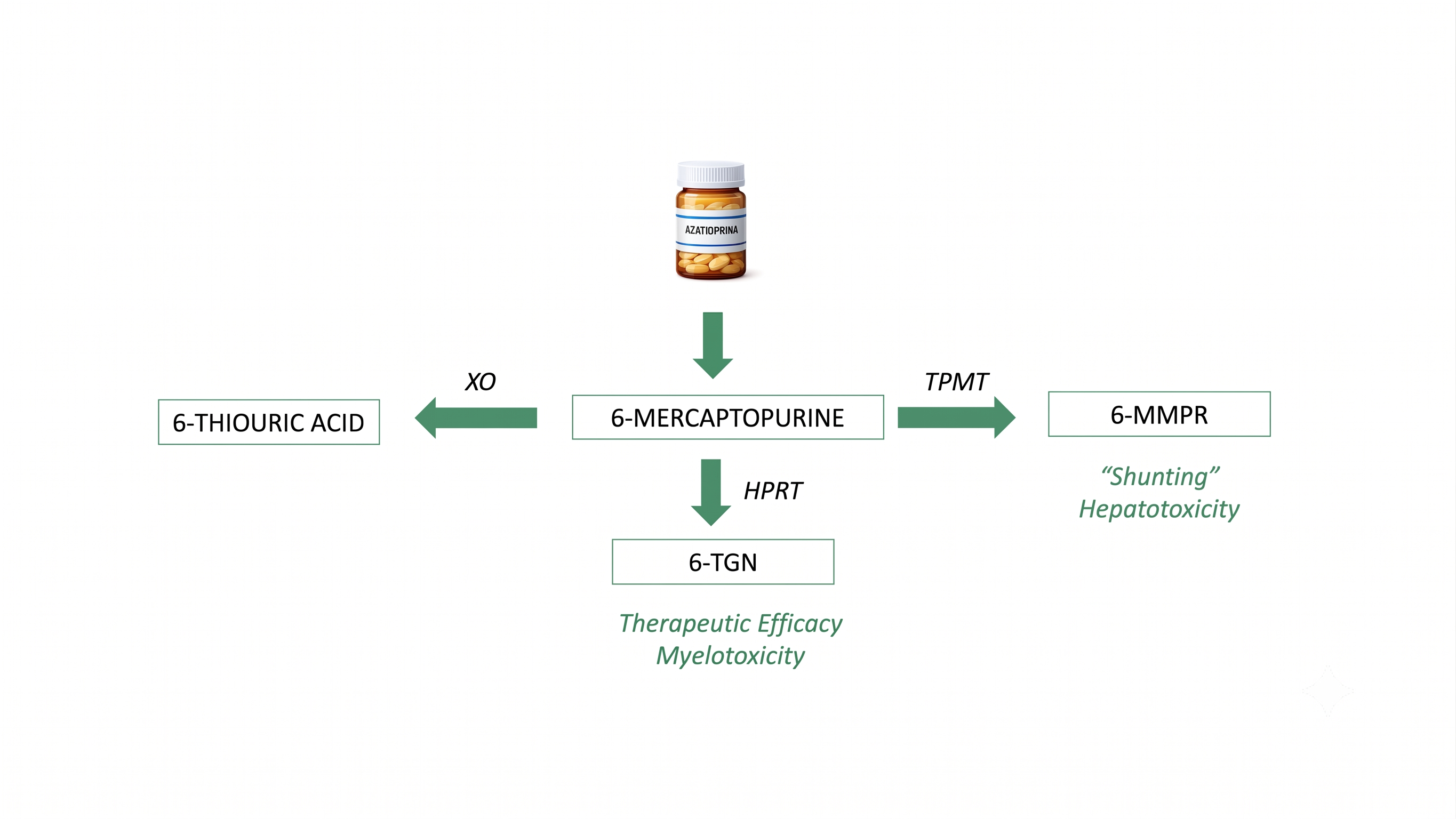
In these situations, the first step is to confirm adherence. Nonadherence to treatment is the most common cause of treatment failure, especially in adolescents and young adults[5],[12]. Adopting a holistic approach that considers the emotional impact the disease may have on the patient can help us understand the fears or difficulties they may face in coping with the disease and its treatment[5]. It is highly recommended to measure azathioprine metabolites (Figure 1), specifically 6-thioguanine (6-TGN), since very low or undetectable levels confirm non-compliance with the medication[1],[5],[12].
It is also worth re-evaluating the initial diagnosis y and considering other conditions that present with persistently elevated transaminases, such as hepatitis E, Wilson’s disease, or drug-induced liver injury (DILI), among others[5],[12].
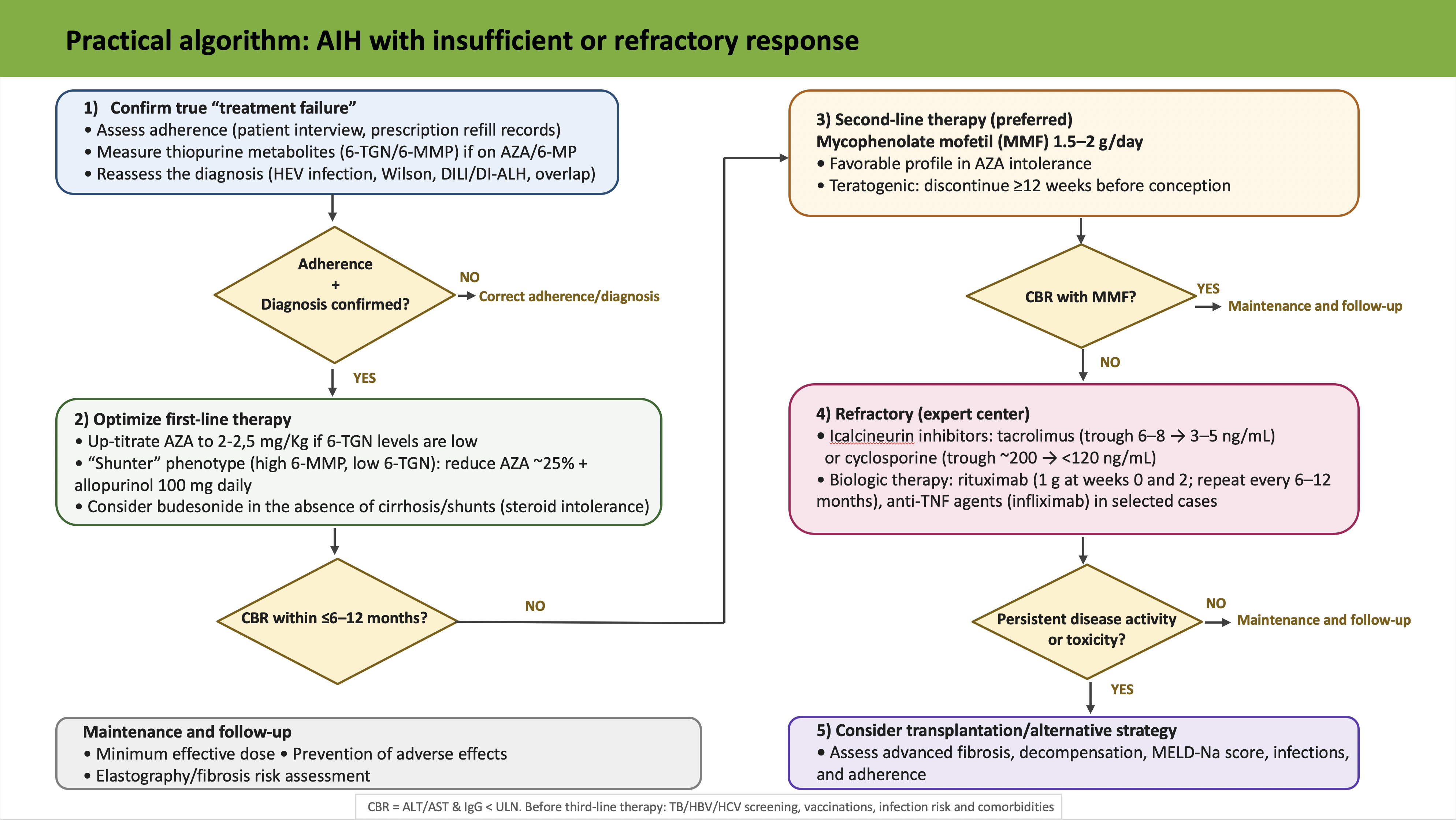
Once adherence and the diagnosis are confirmed, the next step is to optimize treatment. To do this, we must adjust the dose of thiopurines, and in this regard, measuring metabolites remains extremely helpful. In patients with 6-TGN levels below 220 pmol/8×10⁸ erythrocytes, the azathioprine dose should be increased to 2 or 2.5 mg/kg[1],[5],[12]. We must also always analyze 6-methylmercaptopurine (6-MMP) levels, as some patients preferentially metabolize 6-mercaptopurine (6-MP) into 6-MMP rather than 6-TGN, which poses a risk of hepatotoxicity without clinical benefit (these are known as "shunters"). In patients with low 6-TGN levels but high 6-MMP levels, the solution is not to increase the AZA dose, as this will increase hepatic toxicity. In these cases, 100 mg of allopurinol daily can be added, which will block xanthine oxidase and allow the AZA dose to be reduced to 25% of the original amount, shifting metabolism preferentially toward 6-TGN[5],[10],[12]. Figure 2 summarizes an algorithm for managing treatment failure.
Intolerance to standard therapy
The management of intolerance to standard treatment in AIH is a fundamental pillar of clinical practice, as general treatment intolerance occurs in 30.4% of patients within the first 6 months of treatment[14]. The following outlines a comprehensive approach to managing intolerance based on the drug involved:
1. Management of AZA intolerance. Intolerance to thiopurines is common and necessitates a change in treatment within the first 6 months in 36.5% of patients[14]. The most common side effects are nausea, vomiting, and abdominal pain (gastrointestinal symptoms), followed by fever, myalgia, and general malaise, which usually appear within the first two weeks of use; myelosuppression, pancreatitis, and hepatotoxicity are less frequent (<2%) but severe[5]. One option is to switch to 6-mercaptopurine (6-MP), since in some patients intolerance occurs due to a reaction to the imidazole component of AZA. It is estimated that between 50% and 75% of patients intolerant to AZA can tolerate 6-MP[1],[15]. Additionally, we can monitor metabolites just as we do with AZA. Another option is to use MMF, a second-line drug that we will discuss below.
2. Management of corticosteroid intolerance. Between 25% and 70% of patients report side effects related to long-term steroid use, which significantly impacts their quality of life[5],[8]. In patients without cirrhosis or portosystemic collaterals, budesonide is an alternative with high first-pass hepatic metabolism (90%), which significantly reduces systemic effects (Cushing’s syndrome, acne, weight gain)[2],[8],[10]. However, it may be less effective than prednisone in cases of high inflammatory activity[10],[11]. If intolerance is severe (uncontrolled diabetes, severe osteoporosis with fractures, psychosis), the steroid dose should be tapered rapidly under strict biochemical monitoring until monotherapy with AZA or MMF is achieved[12]. Finally, in specific populations where steroids are undesirable (morbid obesity, severe metabolic syndrome, adolescents at risk of poor adherence due to body image concerns), rituximab has been used as an initial alternative to induce remission while avoiding exposure to corticosteroids[2].
Second- and third-line therapies
These are reserved for patients with an inadequate response to or proven intolerance of AZA. Table 2 summarizes the most commonly used agents.
Table 2
Second- and Third-Line Therapies: Indications, Suggested Doses, and Risks.
1. Mycophenolate mofetil (MMF): This is the drug of choice for AZA intolerance, with response rates ranging from 62% to 92%[1],[16]. However, its efficacy in patients with true non-response to AZA is significantly lower, achieving RBC in only 32% to 38% of cases, with factors independently associated with a poorer response including younger age, higher pretreatment IgG levels, and a longer duration of INR[6],[17]. It is generally used at a dose of 1.5–2 g/day (divided into two doses), and it is crucial to remember that it is teratogenic, so it must be discontinued at least 12 weeks before conception.
Recently, the use of MMF has established itself as an effective and safe alternative to standard first-line treatment[1],[5]. This recommendation is primarily based on the results of the CAMARO clinical trial, which demonstrated the superiority of MMF over AZA in inducing RBC (72.2% vs. 32.3%)[18]. It also has significantly lower rates of serious adverse events and treatment discontinuation due to intolerance compared with AZA (5.1% vs. 25.8% in the CAMARO study)[18]. Although MMF is better tolerated, some experts still prefer AZA in certain contexts because its levels (6-TGN metabolites) can be monitored to optimize the dose, it is safe during pregnancy, and it is generally less expensive in many countries[11].
2. Calcineurin inhibitors. These are options typically used when both first- and second-line treatments fail. Their use is recommended in specialized centers[1],[10]. By inhibiting calcineurin, an enzyme necessary to activate the nuclear factor of activated T cells, they prevent the synthesis of cytokines required for the development and survival of activated T cells[2].
a. Tacrolimus (TAC): This is the best-studied third-line agent[1],[12], although the available evidence is limited, based primarily on small, heterogeneous cohorts or case series without control groups[1],[5]. The overall response rate is 74.7% in patients refractory to or intolerant of standard therapy[2],[19]. Response rates in patients with an inadequate response range from 56% to 78%[20],[21]. The usual dose is 0.1 mg/kg every 12 hours to achieve trough levels of 6–8 ng/mL. Once a response is achieved, the dose should be gradually reduced to maintenance levels of 3–5 ng/mL[12]. TAC is a potent immunosuppressant with a narrow therapeutic window, so it requires close monitoring to track and manage potential and common adverse effects: nephrotoxicity, hypertension, hyperlipidemia, diabetes, etc.[1],[5].
b. Cyclosporine A (CsA): As with TAC, the evidence is limited and based on experience from expert centers[2]. Experience with its use comes primarily from its use in the pediatric population, especially in severe cases or to prevent steroid-related side effects[1]. In the adult population, recent studies report a response rate of 35.4% in patients unresponsive to prior treatments, rising to 60% when including those with intolerance[22]. CsA is effective in inducing remission, particularly in steroid-resistant cases, serving as an alternative to steroids to avoid their adverse effects, which could be beneficial in the presence of certain comorbidities, such as obesity and diabetes[2]. However, it is not ideal for maintenance therapy due to its long-term side effects. The usual dose in adults is 2 mg/kg twice daily to achieve levels of approximately 200 ng/mL, with the dose reduced once remission is achieved to trough levels of <120 ng/mL[12]. Renal function must be closely monitored due to the risk of nephrotoxicity, as well as hypertension, gingivitis, neurotoxicity, etc.[2].
3. Biological agents: These are drugs used as third-line rescue therapy; their use is recommended by the European Association for the Study of the Liver (EASL) and the IAIHG in specialized centers due to the lack of randomized controlled trials[5]. It is very important to rule out latent infections prior to treatment (such as tuberculosis) and ensure a complete vaccination schedule[5],[12]. It is also advisable to register cases in international networks, such as the European Reference Network for Rare Liver Diseases (ERN RARE-LIVER), to thereby strengthen the international scientific evidence regarding these therapies[12]. The use of the main agents is detailed below:
a. Rituximab. It is a chimeric monoclonal antibody that depletes B cells by binding to the CD20 antigen, thereby reducing antigen presentation to T cells, decreasing cytokine-mediated inflammation, and inhibiting the recruitment of effector cells to the liver[7]. Regarding its efficacy, in an international cohort of 22 treatment-resistant patients, biochemical improvement was observed in all cases, and 71% of patients remained flare-free at two years[23]. In a recent study from the Spanish ColHai registry, the response rate in refractory AIH was 86%, and it also allowed for a significant reduction in steroid dosage[24]. The usual dosage is 1 gram intravenously in weeks 0 and 2, with the dose repeated every 6–12 months depending on the biochemical response and B-cell repopulation[1]. Regarding safety, it is considered a drug with infrequent serious adverse effects, although there is a risk of serious infections, especially if severe hypogammaglobulinemia develops; therefore, monitoring of serum immunoglobulins, particularly IgG and IgM, is recommended before and during treatment[7].
b. Infliximab. It is a recombinant chimeric monoclonal antibody that blocks the binding of tumor necrosis factor alpha (TNF-α) to its receptors, inhibits the signaling pathways of proinflammatory cascades, and promotes apoptosis of activated T cells that produce TNF-α. In this way, it reduces disease activity in various autoimmune diseases[3],[7]. In a multicenter retrospective study of 42 patients with IAI, infliximab induced or maintained complete biochemical remission in 78% of cases and specifically rescued 55–57% of patients who had failed previous second- or third-line treatments[3]. It is typically administered at a dose of 5 mg/kg at weeks 0, 2, and 6, and then every 8 weeks. It is considered a "double-edged sword" because, although it is effective as a rescue therapy, it can also induce immune-mediated liver injury that mimics or triggers de novo AIH[25],[26]. It should also be noted that it has a high rate of infectious complications, reported in up to 64% of patients in some small series, particularly in those with underlying cirrhosis[1],[27].
c. B-cell activating factor (BAFF) inhibitors. This is a cytokine belonging to the TNF family expressed by T and dendritic cells that plays a role in the development and differentiation of B cells. BAFF levels are associated with liver inflammation, so its inhibition could be a pathogenetically justified third-line treatment option[1],[28].
i. Belimumab. This is a human antibody that inhibits soluble BAFF. It has been used empirically in refractory cases with encouraging results, achieving complete remission and improvement in fibrosis in some case reports[29].
ii. Ianalumab (VAY736). Targeting the BAFF receptor (BAFF-R), it promotes B-cell elimination through antibody-dependent cellular cytotoxicity[8]. It is currently being evaluated in a Phase II/III clinical trial (NCT03217422) for refractory or intolerant patients[7].
d. Other agents.
i. Basiliximab. An anti-CD25 (IL-2 receptor) antibody that inhibits T-cell activation. Its successful use has been reported in isolated cases of severe AIH associated with immune checkpoint inhibitors[9].
ii. Tocilizumab (anti-IL-6). It is considered a potential option given the importance of IL-6 in Th17 cell differentiation in AIH[8].
iii. JAK Inhibitors (Tofacitinib). It has been used as a rescue therapy in patients who do not respond to previous biologics, showing improvement in transaminase levels[3].
Management of Acute and Severe Autoimmune Hepatitis.
The therapeutic approach for patients with acute and/or severe presentations of AIH is a complex situation that requires rapid decision-making and often the intervention of a liver transplant center, as the prognosis without treatment is very poor [5],[10].
As noted earlier, acute and severe presentations of AIH include Severe Acute AIH, acute liver failure, and acute-on-chronic liver failure. The primary goal is to rapidly initiate a therapeutic trial with corticosteroids to induce remission and avoid the need for liver transplantation, or to refer the patient directly to a transplant center if the prognosis is extremely poor[5],[6].
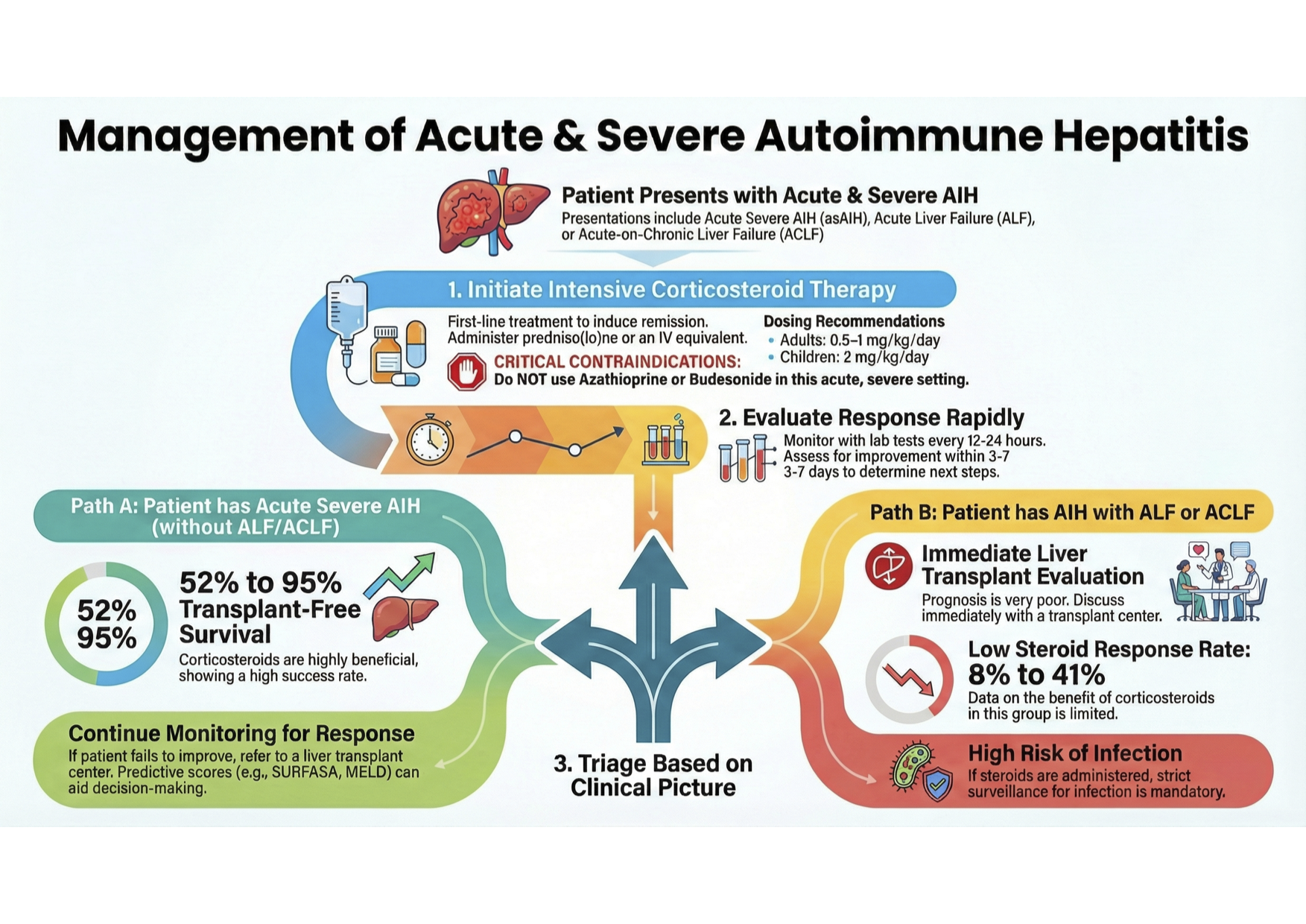
1. Induction therapy with corticosteroids. Initial treatment for AIH, ALF, or ACLF is intensive and based on corticosteroids. In adults, early treatment with prednisolone at 0.5–1 mg/kg/day or intravenous (IV) methylprednisolone at an equivalent dose is recommended[5],[11]. In children, prednisolone at 2 mg/kg/day or an equivalent IV dose (IV methylprednisolone doses equivalent to 0.5–1 mg/kg/day have been used)[6],[0].
Combination with AZA is contraindicated as it could cause toxicity and make it difficult to distinguish between lack of response and AZA-induced hepatotoxicity. Budesonide is also contraindicated in patients with a severe acute course of the disease or with established cirrhosis, as its first-pass metabolism is impaired in these cases, increasing toxicity[5],[6].
2. Rapid assessment of response and criteria for LT. Response to treatment must be evaluated very closely and rapidly, with laboratory tests performed every 12–24 hours[6]. Management of acute and severe forms requires strict monitoring due to the risk of rapid deterioration; it is crucial to assess the response to corticosteroids or determine whether the patient should be urgently referred for LT[5],[11].
In severe cases without ALF or ACLF, the benefit of early corticosteroid therapy is highly significant, with transplant-free survival rates ranging from 52% to 95.2%[5]. Predictive models have been developed to assess lack of response to corticosteroids and the need for LT, such as the SURFASA score, which evaluates the INR at the start of steroid therapy and its change, as well as bilirubin levels on the third day of treatment[30] or a nomogram based on age, the MELD (Model for End-Stage Liver Disease) score, hepatic encephalopathy, and ascites, with the MELD score on the 7th day of steroid treatment being the best univariate predictor of response[31].
In cases of ALF and ACLF, patients have the worst prognosis, with steroid response rates ranging from 8% to 41%; therefore, immediate consultation with a LT centre is recommended, as data on the role of steroids in these patients are limited and outcomes are generally poor[5]. If corticosteroids are administered, close monitoring for possible infections is necessary, as the risk of infection is increased[5] (Figure 3).
Management of overlap syndromes
The management of overlap syndromes (or variants) involving AIH requires an approach based on the predominant component of the disease, given that these patients exhibit clinical, serological, and histological features of both AIH and an autoimmune cholestatic disease, primarily PBC or PSC.
The following details the approach for the two main overlap syndromes:
1. AIH/PBC overlap syndrome. It affects nearly 10% of adults with AIH or PBC[6],[8]. The diagnosis is established using the Paris criteria, which are the most validated for this syndrome and encompass diagnostic features of both conditions (table 1)[6]. The initial treatment regimen should be determined based on biochemical parameters and histological findings[5]:
a. If AIH is the predominant component (i.e., moderate or severe hepatitis based on the modified histological activity index score—mAIH): standard immunosuppressive therapy (corticosteroids with or without AZA) followed by the addition of ursodeoxycholic acid (UDCA) at a dose of 13–15 mg/kg/day if there is no response. The latest EASL guidelines suggest combining both from the outset to protect against long-term complications of PBC (such as the development of ductopenia and biliary-related cirrhosis)[5].
b. If the cholestatic component is predominant (i.e., only mild hepatitis on biopsy), monotherapy with UDCA may be used initially, and immunosuppressive agents may be added if the patient does not achieve RBC.
2. AIH/PBC overlap syndrome. This syndrome is reported primarily in children, adolescents, and young adults[8]. In the pediatric population, it may be referred to as autoimmune sclerosing cholangitis (ASCC), which can be considered part of the spectrum of the variant form of PBC with a strong inflammatory component[5]. For diagnosis, magnetic resonance cholangiography (MRCP) is recommended for the initial evaluation of all cases of AIH in childhood, regardless of whether cholestatic enzymes are elevated, as well as in young adults with cholestasis or those who do not achieve RBC[5][6]. If disease activity persists or cholestatic features are present at follow-up, MRCP should be repeated. Other features suggesting underlying PBC in patients with AIH include prominent splenomegaly, marked portal hypertension, and evidence of concomitant inflammatory bowel disease[5]. Treatment of this variant is also determined based on the predominant component:
a. If the simplified AIH score is >5 and the mAIH is >3, a combination of immunosuppressive therapy and UDCA (13–15 mg/kg/day) is recommended. The beneficial role of immunosuppression has been confirmed in these cases.
b. If these AIH criteria are not met, then use UCDA at doses of 13–23 mg/kg/day.
In cases with additional PSC criteria, the need for endoscopic intervention to treat high-grade strictures should be evaluated[10].
Patients with AIH/PSC generally have a worse prognosis than patients with AIH alone or AIH/PBC, as liver fibrosis may progress even with combination therapy[5].
Management of autoimmune hepatitis during pregnancy.
The management of AIH during pregnancy is a critical issue that requires a coordinated multidisciplinary approach between hepatologists and obstetricians. In general, pregnancy is viable and safe for most patients with AIH, especially if the disease is well controlled prior to conception[5],[10]. AIH is associated with a slight decrease in fertility, particularly in cases of cirrhosis or poorly controlled disease, but most patients can conceive successfully[6]. It is essential to discuss plans for childbearing before initiating certain treatments. It is recommended that the patient remain on RBC for at least 24 months before attempting to conceive, as this reduces the risk of flare-ups and preterm birth[32]. Here are some key points:
1. Fetal and maternal risks. Patients with AIH have a higher risk of complications compared to the general population[6].
a. Maternal complications: Higher likelihood of gestational diabetes (OR 2.84) and hypertensive complications such as preeclampsia, eclampsia, and HELLP syndrome (OR 2.22)[33]. The overall rate of maternal complications is 38% during pregnancy or the first postpartum year, and the highest risk occurs when cirrhosis is established[6].
b. Fetal outcomes: There is an increased risk of preterm birth, low birth weight, and small-for-gestational-age infants. The rate of fetal loss and intrauterine fetal death is approximately 27%[6]. The presence of portal hypertension is associated with a higher frequency of preterm births[5].
2. Pharmacological management. Adjusting medication is the key to safe management:
a. Safe medications (continue): Maintenance therapy with thiopurines, with or without corticosteroids, should be continued throughout pregnancy. These drugs are not associated with an increased risk of fetal complications and are also safe during breastfeeding[5].
b. Contraindicated medications (discontinue): MMF is highly teratogenic. It must be discontinued at least 3 months (12 weeks) prior to conception in both women and men (due to the risk of genotoxicity)[5]. The use of allopurinol is also contraindicated during pregnancy due to its teratogenic risk.
3. New diagnoses: If AIH presents for the first time during pregnancy, standard steroid-based regimens should be used, strictly excluding MMF.
4. Risk of flares. The course of AIH varies significantly by trimester. During pregnancy, flares are relatively rare (13%), as hormonal and immunological changes typically provide good disease control, especially in the first and second trimesters[10]. The postpartum period is the time of greatest risk. It is estimated that 41% of patients experience a flare-up (typically around 11 weeks postpartum). This requires close monitoring and, often, preventive intensification of immunosuppression after delivery[5].
Management of Drug-Induced Autoimmune-Like Hepatitis (DI-ALH).
The therapeutic approach to DI-ALH differs from that of classic AIH, as DI-ALH is a transient condition that, in most cases, resolves after discontinuation of the causative agent[5],[10]. The key to management lies in the immediate withdrawal of the suspected drug and close monitoring to differentiate it from idiopathic AIH, which requires long-term immunosuppression. The recommended therapeutic approach for DI-ALH, according to the latest EASL guidelines[5](Table 3), is detailed below:
Table 3
Second- and Third-Line Therapies: Indications, Suggested Doses, and Risks.
1. Immediate withdrawal of the causative agent. This is the initial and most important step (drugs, herbs, dietary supplements, or vaccines). DI-ALH has been associated with more than 40 different substances, including minocycline, nitrofurantoin, hydralazine, methyldopa, imatinib, statins, and biologics such as infliximab or adalimumab[4]. Exposure generally must have occurred within 3 to 12 months prior to the onset of hepatitis[5].
2. Corticosteroid treatment. In many cases, the disease resolves spontaneously after the causative agent is removed. However, corticosteroid therapy is indicated in specific situations:
a. A short course of prednisolone is recommended in patients with severe hepatitis, impaired liver function, or those who do not show improvement in liver function tests within 30 days after discontinuation of the implicated agent. Patients with severe DI-ALH who meet the Hy criteria (ALT >3 times ULN and total bilirubin >2 times ULN) and who have not achieved biochemical resolution by 30 days benefit from corticosteroid treatment. The recommended regimen is an initial dose of 0.5 mg/kg/day, followed by rapid and progressive tapering until complete withdrawal, generally within 1 to 2 months. Liver biopsy is considered highly useful before initiating corticosteroids to confirm AIH-like lesions histologically and rule out other conditions.
3. Differential diagnosis based on the course of the disease. The prognosis and the need for long-term treatment are the most important distinguishing factors between DI-ALH and classic AIH. If hepatitis resolves without relapse after corticosteroid withdrawal, a diagnosis of DI-ALH is assumed. Otherwise, the diagnosis of AIH is confirmed, and standard combined induction and maintenance therapy (corticosteroids with AZA or MMF) should be initiated. The histological features of DI-AIH may be indistinguishable from those of AIH, as it may present with lymphoplasmacytic infiltrate and interface hepatitis. However, the finding of advanced fibrosis/cirrhosis is less common in DI-ALH[6].
Management of patients with AIH and decompensated cirrhosis
The management of patients with AIH and decompensated cirrhosis is a highly complex and high-risk situation that requires rapid and coordinated care, prioritizing evaluation for liver transplantation; therefore, management should be conducted at referral centers or in consultation with experts, due to the high risk of complications and the limited evidence available regarding treatment in this subgroup[5]. One of the main and most controversial issues is the decision to initiate immunosuppressive therapy due to the risk of complications, particularly infectious ones (the leading cause of mortality); consequently, there is little published data on this topic[34],[35]. In general, its use is considered if there are signs of active AIH, that is, elevated aminotransferases and/or an mAIH >4. In these cases, prednisolone is used at a dose of 20–30 mg daily[5], always under strict monitoring for possible infections. A recent study shows that the main predictors of response are hepatic encephalopathy and the MELD-Na score (sodium-adjusted Model for End-Stage Liver Disease) and serve to guide the therapeutic decision[36]. Patients with grade 3 or 4 encephalopathy have a 7% probability of transplant-free survival (TFS) if they initiate immunosuppressive therapy; therefore, in this situation, they should always be considered for early initiation of LT. Patients with grade ≤ 2 encephalopathy have a TFS of 60% with immunosuppressive therapy, but only 12% if the MELD-Na > 28 compared to 64% if it is ≤ 28. Thus, patients with grade ≤ 2 encephalopathy and MELD-Na > 28 will also be considered for immediate TH[36].
Management of AIH in patients with MASLD
The management of AIH in patients with MASLD requires a personalized and multidisciplinary approach due to the complexity of the coexistence of both conditions[5]. The prevalence of MASLD in patients with AIH is similar to that in the general population; therefore, the coexistence of these conditions is not uncommon and is associated with greater severity and a poorer prognosis[37]. The recommended approach is as follows:
1. Treatment principles and general approach. Patients should receive standard treatment for AIH with the goal of achieving complete remission and preventing the progression of liver disease without exacerbating MASLD.
2. Management of immunosuppression. The use of corticosteroids in this subpopulation should be cautious, as they can exacerbate hepatic steatosis, obesity, hypertension, and peripheral insulin resistance. A personalized and multidisciplinary approach is recommended for the administration of prednisolone, aiming for the lowest effective dose and planning for a more rapid tapering[5].
3. Management of MASLD. It is essential to control the components of metabolic syndrome (diabetes, hypertension, dyslipidemia, obesity, etc.) to improve prognosis and prevent complications; in many cases, a multidisciplinary approach involving other specialties is necessary, and lifestyle changes aimed at weight loss—including exercise, dietary modifications, and behavioral therapy—must also be implemented[5],[6].
4. Treatment monitoring. The coexistence of MASLD can complicate the assessment of response to treatment for AIH, as the presence of steatosis may prevent complete normalization of liver function tests, which affects the definition of RBC. Patients with AIH and MASLD tend to have lower levels of aminotransferases, alkaline phosphatase (ALP), and IgG compared to those with AIH alone[11]. In cases of insufficient response to treatment, a follow-up liver biopsy may be necessary to differentiate the relative roles of AIH activity and MASLD in abnormal laboratory values[5],[12].
Conclusions
The management of complex AIH requires a shift from rigid protocols toward personalized medicine. The judicious use of biomarkers (metabolites), the early use of therapeutic alternatives and dynamic prognostic algorithms, as well as new biologic therapies, is redefining the options for patients who do not respond to conventional treatment or who are in special situations or have comorbidities that cannot be ignored. Success depends on accurate diagnosis, strict monitoring of adherence, and multidisciplinary management in specialized centers.
Statement on the Use of Artificial Intelligence
The authors declare that an artificial intelligence tool (NotebookLM, Google) was used to assist in organizing the literature and generating preliminary drafts of some sections of the manuscript, using exclusively the articles selected by the authors. All content was critically reviewed, corrected, and validated by the authors, who assume full responsibility for the accuracy, integrity, and originality of the work. This use does not imply that AI performed independent scientific interpretation or analysis of non-bibliographic data.
Acknowledgments
The authors would like to thank the Andalusian Hepatology Group of the Andalusian Society of Gastroenterology (SAPD) for the trust placed in them in proposing the topic and selecting the authors for the presentation given at the 56th SAPD Congress. This manuscript is based on that scientific activity.